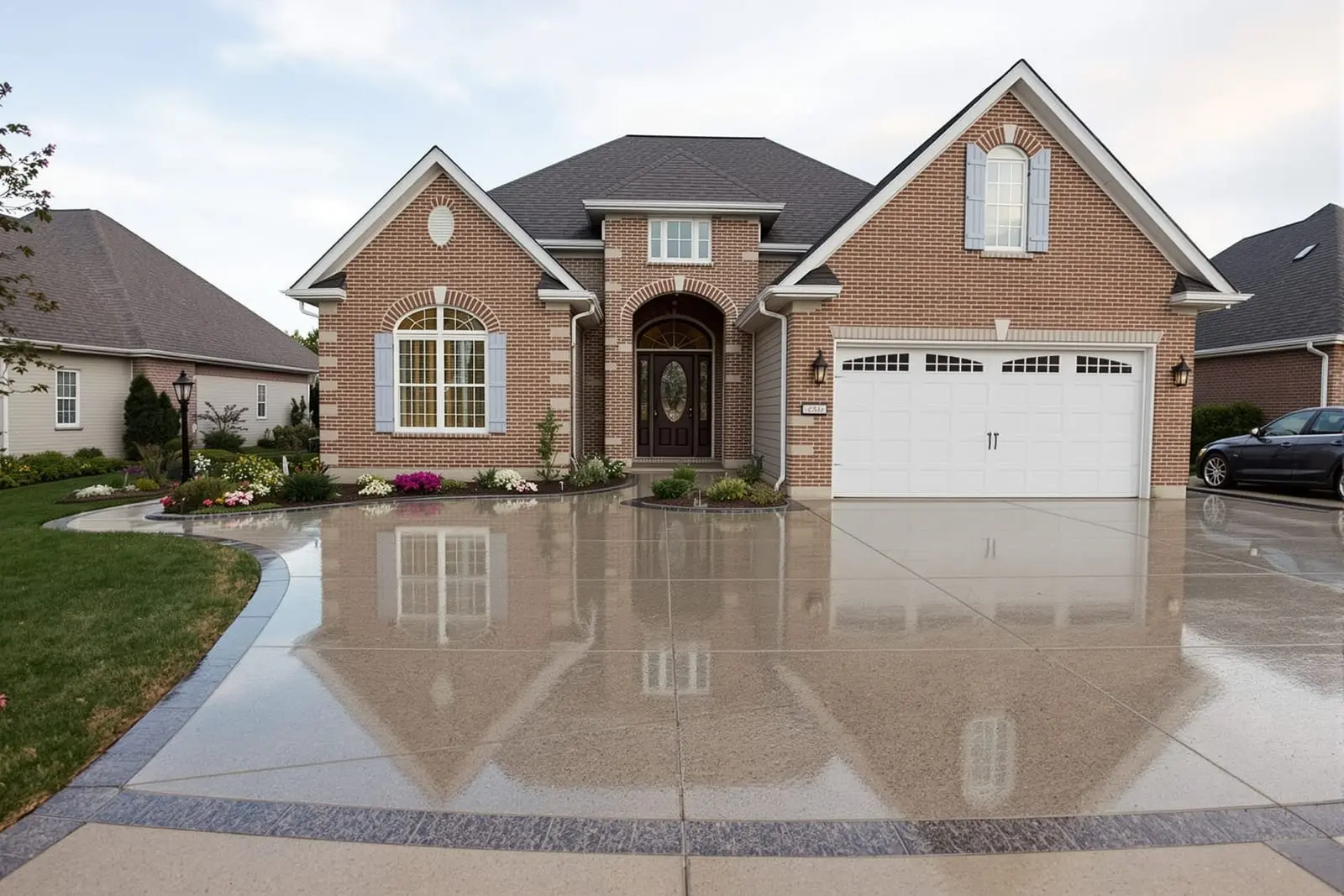
Get the look of stone, brick, or pavers with the strength of concrete using stamped concrete in Columbus, OH. We install decorative concrete patios, walkways, and pool decks with rich textures and colors. Our team helps you select patterns and finishes that complement your home and resist weather and wear.
Primetime Concrete Columbus provides professional stamped concrete throughout Columbus, OH and the surrounding area. Our licensed, insured crew delivers safe, clean, on-time work with a free estimate before anything begins. Call (614) 826-6493 or request your free quote.
Stamped Concrete Design Tailored to Columbus Homes
Stamped and decorative concrete is about more than just patterns. Done right, it can completely change how your Columbus property feels and functions. At Primetime Concrete Columbus, we look first at how you actually use the space, then match the stamp style, color, and finish to your home and neighborhood.
In older Columbus neighborhoods like Clintonville, Grandview, and German Village, many homeowners want new patios or walks that look like brick or weathered stone so they match 1920s to 1940s homes without the constant resetting and weeding that comes with real pavers. For newer homes in suburbs like Powell, Canal Winchester, or Hilliard, we often install larger stamped slabs that mimic clean-cut flagstone or modern wood planks so the outdoor space feels contemporary and low maintenance.
Before we quote a stamped concrete project, we walk the site and talk through how you plan to use it. Heavy grill station or hot tub on the patio, frequent car traffic on a decorative driveway, or kids running and biking across the surface all the time each call for different thicknesses, reinforcement, and texture depth. We also look at shade, drainage, and how close you are to big trees that might move the ground over time. This practical planning is what keeps the concrete from cracking more than normal hairlines or holding water in the wrong spots.
We bring pattern books, sample color chips, and photos of completed local projects so you can see exactly what slate, cobblestone, ashlar, or wood grain stamps look like in real Columbus light. If you are trying to match existing brick steps, a stone veneer, or even interior flooring that carries out to the patio, we will aim for a coordinated color and texture so your stamped concrete looks intentional and not like an add-on.
Our Stamped Concrete Installation Process, Step by Step
Every property is different, but a typical stamped concrete project with Primetime Concrete Columbus follows a clear process so you know what is happening and why.
1) Site evaluation and layout: We check existing concrete, soil condition, slope, and where water currently flows. In Columbus, we are careful not to create low spots that hold winter melt. We mark the layout with paint and strings, confirm dimensions with you, and talk through any elevation changes to make sure doors clear and steps feel comfortable.
2) Excavation and base: For patios and walks, we usually remove 4 to 6 inches of soil, sometimes more if the ground is soft or full of organic material. We install and compact a crushed limestone base, which is widely available around central Ohio, to limit settling during freeze and thaw cycles. For decorative driveways, the base is thicker and more heavily compacted because of vehicle loads.
3) Forms and reinforcement: We build wood or composite forms that define the edges and slopes. Then we place reinforcement, usually steel rebar or wire mesh, depending on the load and layout. Around Columbus we see a lot of older slabs that were poured without steel and have wide cracks. We do not skip steel on stamped surfaces because they are more expensive to replace.
4) Mixing and pouring: We use ready-mix concrete designed for our climate, often with air entrainment to handle freeze and thaw cycles, and sometimes with fiber reinforcement for added crack control. Integral color can be mixed into the load if you want the base color running through the slab, which is a good option when you expect visible wear, like on driveway edges.
5) Coloring and stamping: After the pour, we screed and trowel to get the surface flat and at the right elevation. Then we apply a color hardener or release agent, depending on the chosen system, which gives your concrete its tone and shadowing. Stamps are then pressed into the surface in a specific sequence so joints line up and repeating patterns are minimized. This part is time-sensitive because the concrete has to be plastic enough to take the imprint but firm enough to hold it.
6) Curing and protection: Once stamping is complete, we cut control joints at the right locations and depths to help manage natural cracking. After the slab has cured enough, we clean off residual release agent and apply a sealer for color enhancement and protection.
Color, Pattern, and Texture Options That Work in Central Ohio
Stamped concrete is highly customizable, but certain choices simply hold up better in Columbus weather and look right with local architecture. At Primetime Concrete Columbus, we help you narrow down the options to what will still look good in 5 to 10 years, not just on day one.
Pattern choices: Common patterns include ashlar slate, seamless slate, cobblestone, random stone, and wood plank. Ashlar and seamless slate are popular on patios in areas like Dublin and New Albany because they blend with both brick and siding. Cobblestone or fan patterns often suit older brick streets and historic-feel neighborhoods. Wood plank stamps are attractive for pool decks and modern patios but we usually recommend a lighter texture in shady areas so the surface is easier to clean.
Color systems: For many projects we use a two-part system, integral color in the concrete for a base tone, then colored release agents or stains for shading. For example, a light gray base with charcoal accents can look like natural stone, while a warm tan base with brown accents fits more traditional brick homes. Extremely dark colors can get hot in summer, especially on south-facing areas, so we usually guide homeowners away from near-black on pool decks or spots where kids go barefoot.
Texture and slip resistance: Columbus winters bring freeze-thaw cycles, deicers, and tracked-in road salt. To manage this, we adjust the surface texture and sealer type. For sloped driveways in neighborhoods like Worthington or Upper Arlington, we limit overly smooth finishes and may add a fine non-slip additive to the sealer. Around pools, we use stamps and sealers that balance appearance with bare-foot comfort and traction, avoiding aggressive textures that trap dirt and make shoveling snow difficult.
Border and accent options: A simple way to upgrade the look is to add a contrasting border or band in a different stamp or color. For instance, a driveway might have a cobblestone border with a large slate pattern in the center field. Patios can include decorative saw cuts that frame seating or dining zones. These details are relatively inexpensive compared to the total project cost but make the finished surface feel one of a kind.
Costs, Timelines, and What Affects Your Price
Stamped and decorative concrete typically costs more upfront than plain broom-finished concrete, but less than installing pavers or natural stone with a full base. Primetime Concrete Columbus is transparent about what drives cost so you can make informed decisions before we start.
Main factors that affect price:
• Size and thickness: Larger areas cost more overall but sometimes less per square foot because setup is spread out. Driveways and areas that carry vehicles or heavy structures may need thicker slabs and more steel, which impacts material and labor.
• Pattern complexity and colors: Simple, seamless slate patterns are usually less expensive than multi-pattern layouts that imitate separate stones or planks. Adding borders, saw-cut designs, or multiple color accents increases the time on site and the detail work, which shows up in the price.
• Site conditions: If we have to remove old, thick concrete, haul away a lot of soil, or work in tight backyards with limited access, labor costs go up. Many Columbus homes packed closely together, especially in city neighborhoods, require more hand work and smaller equipment.
• Drainage and grading corrections: Fixing pitch issues around older homes, where patios or drives tilt toward foundations, can require extra excavation and base work. This adds cost but is usually cheaper than dealing with water in a basement later.
Timelines: A typical stamped patio project, around 300 to 500 square feet, usually takes 2 to 4 working days on site, not counting weather delays. Day one is demolition and base, day two forms and pour, day three stamping and early cleanup, with sealing a few days later once the concrete has set enough. Driveways or complex multi-level patios can take longer.
Season and weather considerations: In Columbus, we are cautious about pouring decorative concrete late in fall or very early spring. Cold nights, sudden storms, or salt exposure during early curing can damage the surface. If a customer needs work done late in the season, we discuss protection measures and possible schedule adjustments rather than rushing a pour in poor conditions.
Common Stamped Concrete Issues in Columbus and How We Prevent Them
Stamped and decorative concrete has to stand up to Columbus freeze-thaw cycles, salt on nearby roads, and shifting soils in some neighborhoods. Primetime Concrete Columbus designs each project to address the most common local issues before they show up.
Cracking: All concrete cracks at some level. Our goal is to control where and how. We install proper control joints at the right spacing and cut depth for the slab thickness, typically within 24 hours of the pour. On decorative driveways and larger patios, we sometimes hide joint lines within the stamp pattern so they look like part of the design. We also pay attention to subgrade preparation and reinforcement, which makes the difference between tight hairline cracks and wide, uneven ones.
Scaling and spalling: In central Ohio, one of the biggest enemies of decorative concrete is the mix of freeze, thaw, and deicers. To reduce surface flaking, we use air-entrained mixes that can handle this movement and discuss deicer use with homeowners. On fresh stamped concrete, we advise against using rock salt during the first winter and recommend calcium chloride or sand if traction is needed.
Color variation and sealer issues: Weather affects how color hardeners, release agents, and sealers bond to the surface. High humidity or unexpected rain can cause clouding or uneven sheen if not handled correctly. We schedule color and sealing work with the forecast in mind and, if needed, return in better weather to apply or adjust sealer. If an older stamped surface in Columbus has turned dull or patchy because of worn-out sealer, we can often clean, lightly repair, and reseal it to bring back color and gloss.
Drainage and heaving: Poor drainage can lead to frost heave and long-term damage. We check nearby downspouts, sump pump discharges, and low spots before we pour. If we see water problems, we might recommend adding a drain, adjusting downspouts, or reshaping the base. Addressing this before installation usually costs less than trying to correct settled or heaved concrete later.
What to Expect When You Work With Primetime Concrete Columbus
Having stamped concrete installed is noisy and messy for a short period, but the process should not be stressful or confusing. Primetime Concrete Columbus focuses on clear communication so you know what is happening from the first visit through the final sealer coat.
During your estimate, we walk the area with you, take measurements, check elevations, and ask about how you plan to use the space. You will receive a written proposal that spells out thickness, reinforcement, pattern, color approach, and sealer type so there are no surprises. If you are comparing quotes from other Columbus contractors, we encourage you to compare these construction details, not just the bottom line.
Before work begins, we confirm utility locations through Ohio 811 when digging is required, schedule dates around weather, and talk through where equipment and materials will be staged. On tight city lots and shared drives, we coordinate with neighbors to minimize inconvenience.
During construction, there is a point where you should stay off the area entirely, followed by a period where light foot traffic is okay but heavy loads are not. We give you clear written guidelines for when you can walk on, place furniture on, and drive on your new stamped surface. For most projects, light foot traffic is allowed after a couple of days, with vehicles held off decorative driveways usually for at least a week.
We also go over long-term care: how often to reseal, what cleaners are safe on decorative finishes, and when to call us to look at a concern instead of trying DIY fixes that can damage the surface. Our goal is that five or ten years from now, your stamped concrete still looks like a feature you are proud to show guests, not something you wish you had done differently.
“
Professional stamped & decorative concrete, done right the first time, quality materials, honest pricing, and results that last.
Primetime Concrete Columbus
Stamped & Decorative Concrete Across Our Service Area