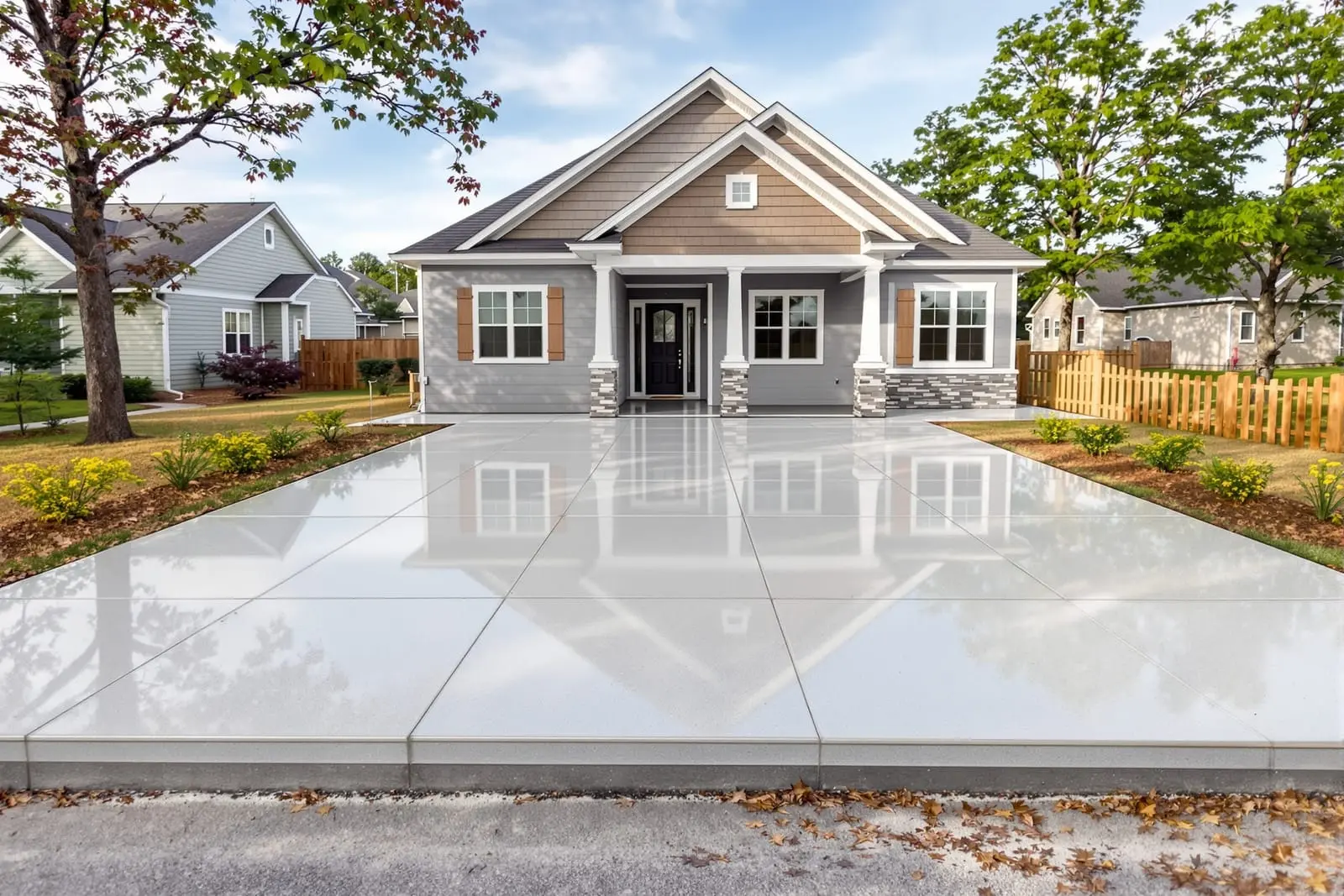
Start your project on a solid base with expert concrete slab foundation work in Columbus, OH. We pour level, reinforced slabs for homes, garages, and additions. Proper site prep, compaction, and formwork ensure long term performance. Protect your structure with a foundation built by experienced concrete pros.
Primetime Concrete Columbus provides professional concrete slab foundation throughout Columbus, OH and the surrounding area. Our licensed, insured crew delivers safe, clean, on-time work with a free estimate before anything begins. Call (614) 826-6493 or request your free quote.
Concrete slab foundations built for Columbus conditions
A concrete slab foundation is more than a flat pad under your house, garage, or pole barn. In central Ohio, it has to handle freeze-thaw cycles, clay-heavy soils, and heavy rain. At Primetime Concrete Columbus, we design each slab around the specific site, not a one-size-fits-all plan.
A typical concrete slab foundation here starts with layout and elevation checks so surface water runs away from the structure, not toward it. We look at nearby drains, downspouts, and how your yard slopes. On many Columbus lots, especially in older neighborhoods, we adjust slab height so you avoid standing water after storms.
We also match slab design to the structure. A basic shed slab is very different from a post-frame building slab, which again is different from a house or addition with plumbing inside the slab. We talk through what will sit on the slab, what kind of loads it will carry, and whether you might add walls or equipment later. That drives thickness, reinforcement, and the type of concrete mix we use.
How we build a long-lasting slab or foundation
For a reliable concrete slab foundation, the base is as important as the concrete itself. We begin with excavation to the proper depth, then remove organic material and soft spots. Many Columbus yards have pockets of fill dirt or topsoil left from past projects. We dig those out and replace them with compactable stone, or your slab will settle and crack.
Next, we install a compacted gravel base, typically 4 to 6 inches for most residential slabs, thicker for heavier loads. We compact in layers with a plate compactor to reach proper density. In parts of Columbus with higher moisture or clay soils, we may recommend a slightly thicker stone base to help drainage under the slab.
We then set edge forms and check for square, level, and correct elevation against your door thresholds and grade. At this stage, we place a vapor barrier (usually 6 mil plastic or thicker) for interior slabs or any slab that will receive flooring. This cuts down on moisture coming up through the concrete and protects flooring adhesives and finishes.
Reinforcement is next. Depending on the design, we install rebar grids, rebar in thickened edges, or welded wire mesh. For heavier-use slabs such as RV pads or workshop floors with lifts, we often use a combination of thicker concrete and tighter rebar spacing.
Once everything is set, we pour the concrete, usually a 4,000 psi mix for residential work in this region. We consolidate, screed, bull float, edge, and apply control joints at calculated spacing so the slab cracks in planned lines instead of randomly. For exterior slabs, we typically use a broom finish for traction and durability.
Design options for your specific slab or foundation
Different projects call for different concrete slab foundation designs. Primetime Concrete Columbus walks you through options based on use, budget, and the condition of your lot.
Thickness and edges: Most standard residential slabs are 4 inches thick, but for garages, pole barns, or equipment pads we often go 5 to 6 inches. For slabs that support bearing walls or posts, we may form thickened edges or interior footings so the load has more bearing area and better frost protection.
Insulation and energy: For heated spaces, we can install rigid foam insulation along slab edges and sometimes under the slab. This reduces heat loss and meets many energy code recommendations. If you are planning radiant floor heat, insulation under and around the slab is critical.
Moisture and finishing: Interior slabs that will receive tile, vinyl, or laminate need a proper vapor barrier, correct flatness, and sometimes a steel trowel finish. Garage and shop floors often use a light broom or trowel finish that is smooth enough to clean but still has traction. Outdoor patios and walks usually get a medium broom finish so they are safe in wet and icy conditions.
Add-ons: If you expect heavy shelving, lifts, safes, or machinery, we can thicken specific zones in the slab and add extra reinforcement. For projects with plumbing (like bathrooms or floor drains), we coordinate with your plumber to place pipes and sleeves in the right spot before the pour, so you do not have to cut the slab later.
What affects cost and timeline in Columbus
Concrete slab foundation pricing depends on more than square footage. Soil conditions, access to the site, thickness, reinforcement, and special details all play a role.
Soil and base prep are often the biggest variables in Columbus. Lots with soft fill or deep topsoil require extra excavation and stone. If we discover unstable pockets while digging, we will explain the issue, show you the area, and give options to correct it before we pour.
Access also matters. A straightforward driveway pour that a mixer truck can back right up to costs less per square foot than a backyard slab that requires pumping concrete over a fence. Tight city lots in neighborhoods like Clintonville or German Village sometimes need smaller equipment and more hand work.
Concrete mix, thickness, and reinforcement change the material and labor cost. A 6 inch slab with a rebar grid and thickened edges for a pole barn will cost more than a basic 4 inch utility slab, but it is usually cheaper than trying to fix a failed slab later. In winter and early spring, we may need blankets, additives, or different scheduling to protect the slab from freezing, which also affects cost.
Timeline depends on the season and weather. Most slabs are formed and poured in a day or two, with another visit for saw cutting joints if needed. You can typically walk on the slab after 24 to 48 hours, but we suggest waiting several days before placing heavy loads or parking vehicles so the concrete can gain strength.
Common problems we prevent and how we fix existing slabs
Most slab and foundation problems we see around Columbus trace back to poor base prep, no control joints, or bad water management. Primetime Concrete Columbus focuses on these issues from the start so you do not have to deal with expensive repairs later.
Cracking: All concrete will crack, but good design controls where and how it cracks. We install joints at proper spacing based on slab thickness and shape, avoid re-entrant corners without proper reinforcement, and use stable base compaction. For existing slabs with random cracking, we can often evaluate whether they are cosmetic or structural and suggest options that range from sealing to partial replacement.
Settling and sinking: When a slab sinks or tilts, it is usually because fill was not compacted correctly or water has washed away support under the slab. On new work, we compact in layers and sometimes use geotextile fabric over very soft soils. For existing sinking slabs, we can often refer you to local partners who handle lifting or underpinning, then we address cracks and surface issues once the slab is stable.
Water issues: Water against a slab or foundation edge is a long-term problem. On new pours, we build in slope away from the structure and look at the placement of downspouts and sump pump discharges. For existing slabs that collect water, we may suggest trench drains, added surface drains, or in some cases regrading or partial replacement of the slab.
By combining solid site evaluation with practical slab design, we help Columbus property owners end up with concrete work that performs the way it should for decades.
“
Professional concrete slabs & foundations, done right the first time, quality materials, honest pricing, and results that last.
Primetime Concrete Columbus
Concrete Slabs & Foundations Across Our Service Area